The Free Cinema
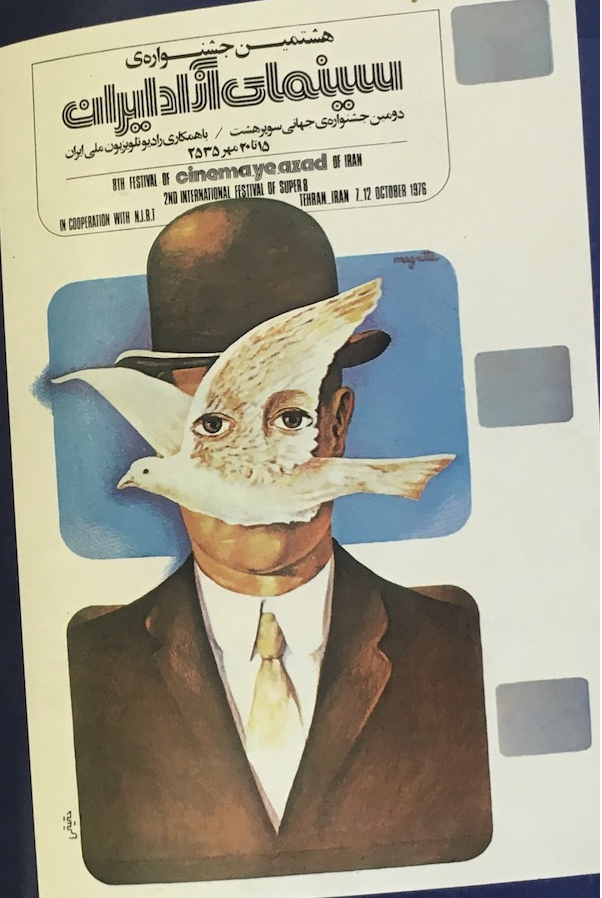
Cinema-ye Azad emerged in Tehran in 1969, initiated by a group of young filmmakers and students led by Basir Nasibi. What began as a modest collective—working with 8mm cameras and screening their films outside the commercial circuit—soon grew into one of the most vital movements in the history of Iranian cinema.
Despite its name, “Free Cinema” did not initially refer to political freedom, but rather to a liberation from the conventions of mainstream Iranian filmmaking, commonly known as Filmfarsi. At the time, commercial cinema was dominated by formulaic narratives, melodrama, and entertainment-driven production. Cinema-ye Azad positioned itself in deliberate contrast: low-budget and independent, driven by ideas rather than technique, and open to experimentation in both form and content.
While it developed alongside the Iranian New Wave, Cinema-ye Azad remained distinctly grassroots and decentralized. Its growth was rapid and far-reaching, with branches established in more than twenty cities across Iran. Hundreds of filmmakers became involved, collectively producing over a thousand short films. Each city cultivated its own local community, organizing screenings, discussions, and festivals, while remaining connected through a broader national network that included annual gatherings, publications, and even links to international Super 8 movements.
What set Cinema-ye Azad apart was its openness. Unlike more exclusive cinematic circles, it welcomed non-professionals and encouraged collaboration, with participants sharing equipment, knowledge, and ideas. In doing so, it extended filmmaking beyond urban centers and intellectual elites, reaching into provinces and marginalized communities. In many ways, it functioned as a nationwide, informal film school—one that nurtured both artistic exploration and critical thought.
The films that emerged from this movement often engaged with everyday life, social inequality, cultural identity, and philosophical reflection. Their style was frequently experimental, influenced by documentary practices, and at times infused with surreal or symbolic elements. The movement also maintained strong connections to contemporary literature, theatre, and poetry, drawing from a broader cultural landscape.
Cinema-ye Azad took shape during a period of deep tension in Iran. Rapid modernization under the Shah was accompanied by growing intellectual dissatisfaction, as well as increasing censorship and political pressure. While cultural production was encouraged, critical expression remained constrained. Within this contradiction, Cinema-ye Azad became a space where these tensions could be explored and expressed.
The movement came to an end around the time of the Iranian Revolution, but its impact endures—both in the filmmakers it shaped and in the enduring idea that cinema can exist beyond institutions, as a collective and deeply human act of expression.
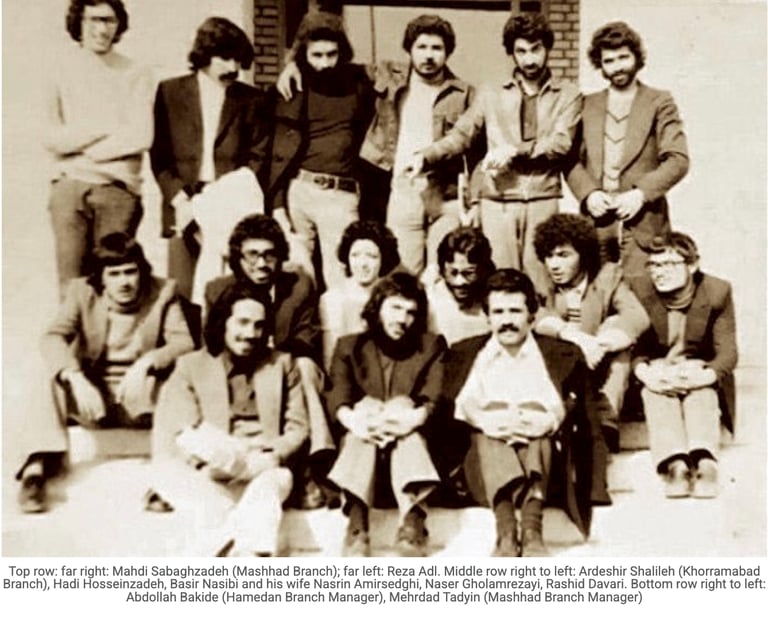
“Revealing history is also a form of resistance”
19 March 2026, SOURCE
The Iranian film historian Hadi Alipanah has rescued the legacy
of a generation of young filmmakers who dared to create an alternative, “free cinema”
during the final years of the Shah’s rule. The mullah regime later erased all memory of
the movement. A conversation about the power of culture, then and now.
The young people who came together in Tehran in 1969 to found the short film collective Cinema-ye Azad (loosely translated: free cinema) saw themselves as pioneers. They dreamed of a different, non-commercial cinema, offering a new perspective on life under the Shah. The revolution of 1979 brought this adventure to an end. The mullah regime subsequently silenced the group; their work was never catalogued, even though it gave an important impulse to Iranian cinema. Hadi Alipanah, a film historian and journalist living in Tehran, came across the movement by chance and managed to obtain a number of their films. The German-Iranian curator Afsun Moshiry supports him. In collaboration with the Munich film magazine Revü, the two recently presented a selection of films at Werkstattkino.
SZ: You travel around the world to screen films from Cinema-ye Azad. What makes this group so special?
Hadi Alipanah: Cinema-ye Azad was a movement of young filmmakers in the decade before the Islamic Revolution. At that time, the film industry in Iran was controlled by large commercial studios or state institutions. They wanted to break away from that. The founder, Basir Nasibi, saw the potential of the then-new Super 8 technology and believed film should be independent, experimental, and accessible to everyone. He organized the first screenings in a backyard in Tehran, where young people who wanted to make their own films met each other—almost always short films. From this, a network of around 300 amateur and experimental filmmakers quickly grew across the country. Cinema-ye Azad organized screenings, festivals, magazines, and even a television program, all on its own initiative.
Under what political circumstances was this possible?
Alipanah: The final years of the Shah’s dynasty were a dictatorship, though not nearly as brutal as today. There was surveillance by the secret police SAVAK, but the cultural sector was less restricted than later under the Islamic Republic. Liberal thinkers certainly worked within government organizations and supported young artists. For example, the then director of Iranian television supported experimental films, even if they were never broadcast.
If you search for the group online, you find almost nothing, not even in relevant publications. Why has this story disappeared from collective memory?
Alipanah: After the revolution, the Islamic regime tried to erase everything from the Pahlavi era from collective memory. At the same time, international attention increasingly focused on the big names of Iranian cinema and their feature films. Short films, as everywhere, were considered less important.
سینمای آزاد
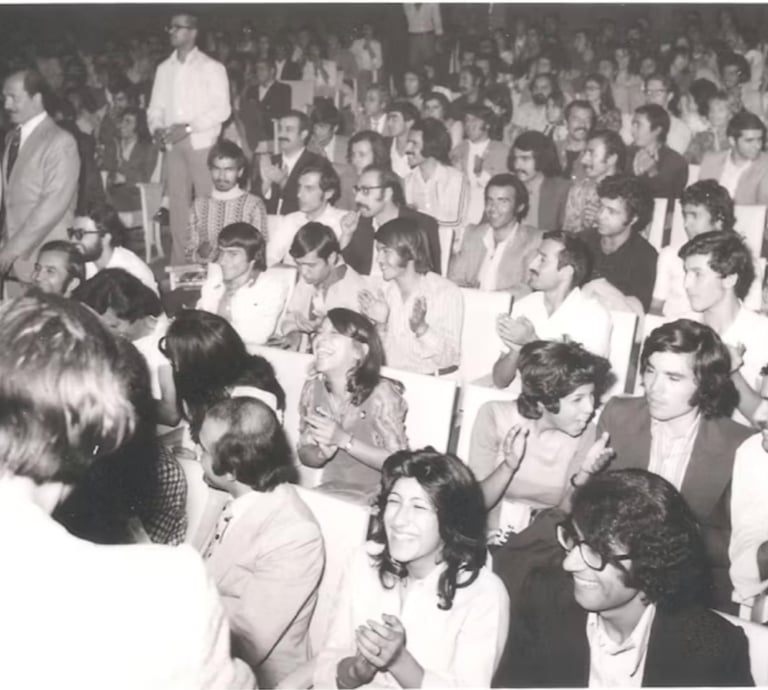
Cinama-ye Azad Festival Tehran/Iran 1973 with Elli Safari front row
Coutesy of Cinama-ye Azad Archive
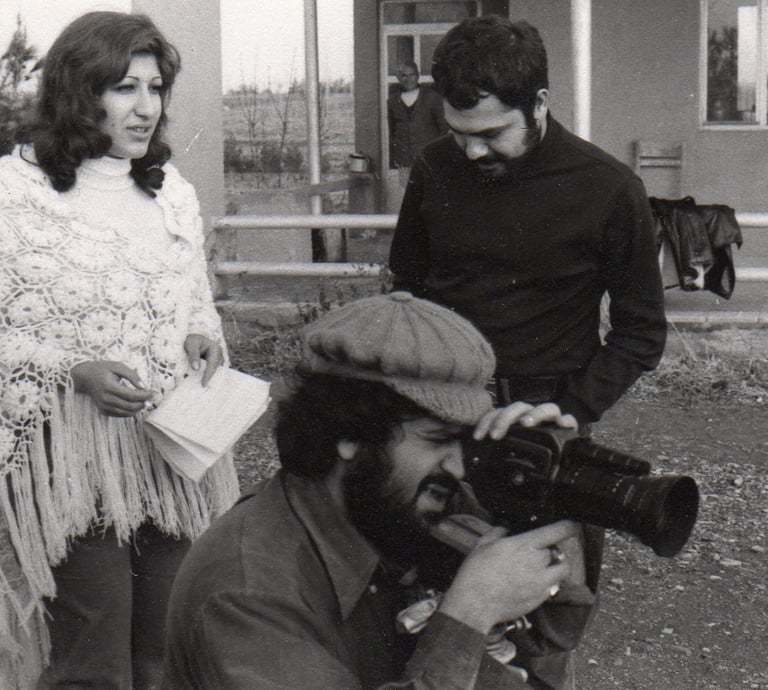
Elli Safari & Shahryar Parsipur (with camera), Tehran 1974
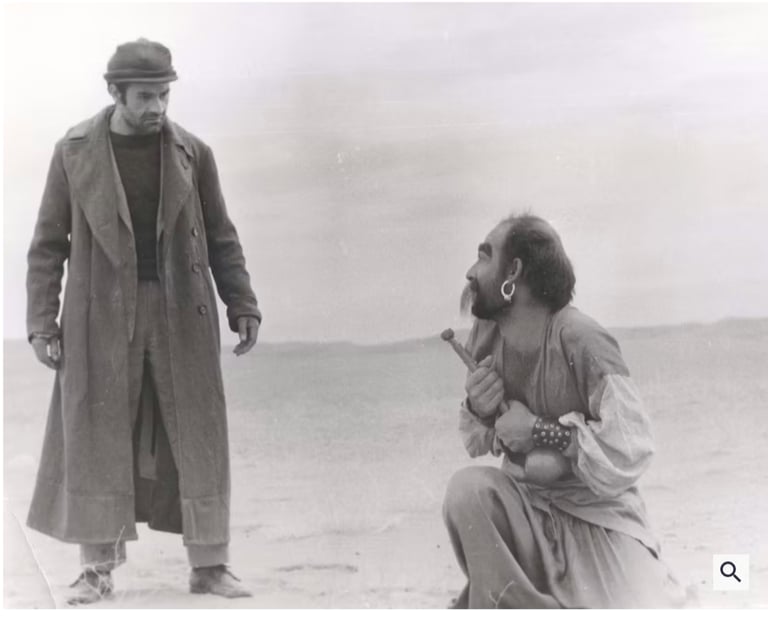
Mir Nasir and the ill-fated Genie by Behnam Jafari from the early period of the movement and one of the few long drama's
Coutesy of Cinama-ye Azad Archive
Why did Cinema-ye Azad produce almost exclusively short films?
Alipanah: It was the only available format. Also for financial reasons—they almost always financed
the films themselves. And most had no formal film education; they learned by doing. But things
developed quickly; from 1973 onward, they also produced some feature films.
“So far, we have found 300 films
out of an estimated 1,000 productions.”
— Hadi Alipanah
Iconic works of early Iranian independent cinema include The House Is Black by Forugh Farrokhzad, The Cow by Dariush Mehrjui, and A Simple Event by Sohrab Shahid Saless. How do these relate to Cinema-ye Azad?
Alipanah: These films come from an older generation of Iranian filmmakers, most of whom studied film abroad and later founded the Iranian New Wave. They inspired and supported the younger generation of Cinema-ye Azad, without being part of the movement themselves. They participated in festivals as jury members, gave workshops, and contributed films for screenings.
How did Cinema-ye Azad relate to other film groups in Iran at the time?
Afsun Moshiry: There was no competition; they exchanged ideas. Alongside Cinema-ye Azad, there was, for example, Kanoon, where Abbas Kiarostami and Bahram Bayzai were active. Many of the older members had studied in Europe and brought back ideas from the Nouvelle Vague. Cinema-ye Azad even screened retrospectives of Bresson and Godard.
How did you come across Cinema-ye Azad?
Alipanah: I’ve been running a website about short films for more than ten years. During my research into Iranian film history, I came across the name, but no one could tell me much about it. Eventually, I found a book by the founder of the group, Basir Nasibi, who lived in Saarbrücken, which had only been published abroad. Through that book, I contacted former members and continued investigating. After a few months, when I had found and watched some of their films, I realized their potential and how far ahead of their time they were.
Where had these films been?
Alipanah: Many filmmakers or their families still had film reels, some of which were damaged. Only one copy exists of each film; if that copy is lost, the entire film disappears. I am still searching for a number of filmmakers. So far, we have found 300 films out of an estimated 1,000 productions. With the help of the Iranian National Film Archive, we have been able to restore and digitize many works, and some are now preserved in the archive of the Arsenal Film Institute in Berlin.
Some of the fascinating films you screened in Munich were set in cities, while others showed the harsh realities of rural life. Why?
Moshiry: At the time, there was a stark contrast between the modernization of cities and the actual lives of people in the countryside. While the urban landscape was meant to appear Western and progressive, many people lived in poverty and sometimes in archaic conditions. We wanted to show both sides, so that the tensions and contradictions of that time could be felt.
One film is about a stench tormenting residents of apartment buildings. How political was that intended to be?
Alipanah: Many of these films convey the feeling that something is coming in Iran, that something is about to change. Artists are especially sensitive to such things. In some films, the political message is clearly visible; in others, it is hidden.
What influence did Cinema-ye Azad ultimately have?
Alipanah: I dare say its true scope will soon become clear. The spiritual father of the collective was Feridun Rahnama, a key figure in Iranian cinema, who made the first independent and experimental film and sadly died in 1975. A filmmaker and poet. Poetry plays a central role in Iranian culture. Since Rahnama, experimental films in Iran have been a dialogue between poetry and image. In the U.S. or Europe, movement is more important.
How much space does independent cinema currently have in Iran?
Alipanah: It is complicated. And yet films are still being made. Filmmakers have learned to outsmart the system and work with the simplest means. 2025 has so far been the most successful year for Iranian short films. They have been shown in Cannes, Venice, Locarno, Berlin, and at all major short film festivals.
Moshiry: Since the protests of 2022, the short film industry has changed drastically. In eighty percent of films, women now appear without headscarves; censorship guidelines are no longer being followed.
How does the regime respond to your work?
Alipanah: There is no support. Like many Iranians, I have learned to adapt and present my projects in a way that does not appear threatening. Nevertheless, I have encountered problems, even dangerous situations. We never screen the films officially, only in small, private circles. However, interest among young people is steadily growing. Paradoxically, it is now easier to show our films abroad than in Iran itself, where cultural activities are the first to be banned and the last to be permitted again when political tensions arise.
How do the current attacks and the situation in Iran affect you?
Alipanah: My entire family lives in Iran, including my wife. Many of my friends and colleagues have remained there; some were killed during the protests in January or now in the bombings. Living under this regime means fighting for your life every day. Even an ordinary day is a form of resistance. After the thousands of killings in January, I was devastated with grief for weeks. Then I forced myself to continue. Like all authoritarian regimes, they hate history; they try to manipulate or hide it. Revealing history is therefore also a form of resistance.
When will you return to Iran?
Alipanah: This coming Friday, via Turkey and the land border; that is currently the only way.
Do you receive support from the German embassy in Tehran or other institutions?
Moshiry: No, not really. From the perspective of the diaspora, Iran is often talked about, but rarely with the people who actually live in the country. At the diplomatic level, the pattern is always the same: in times of crisis, the German embassy sends its staff home, remains officially open, but in reality helps no one. As a result, those affected cannot turn to other embassies either. I have experienced five such crises in the past five years; it seems to be a structural problem. Although individual staff members do their best, the restrictive policy comes directly from the Ministry of Foreign Affairs.
What do you think of the recent attacks and the situation in Iran?
Alipanah: It is very difficult. Many international human rights organizations remain silent or misunderstand the situation. After the events in January, I have lost all trust in them. In Iran itself, the situation is terrible: bombs are falling, homes are being destroyed, friends and filmmakers have been killed. But people’s greatest fear is that the regime will survive this crisis. Armed men patrol Tehran and openly threaten on television to shoot demonstrators.