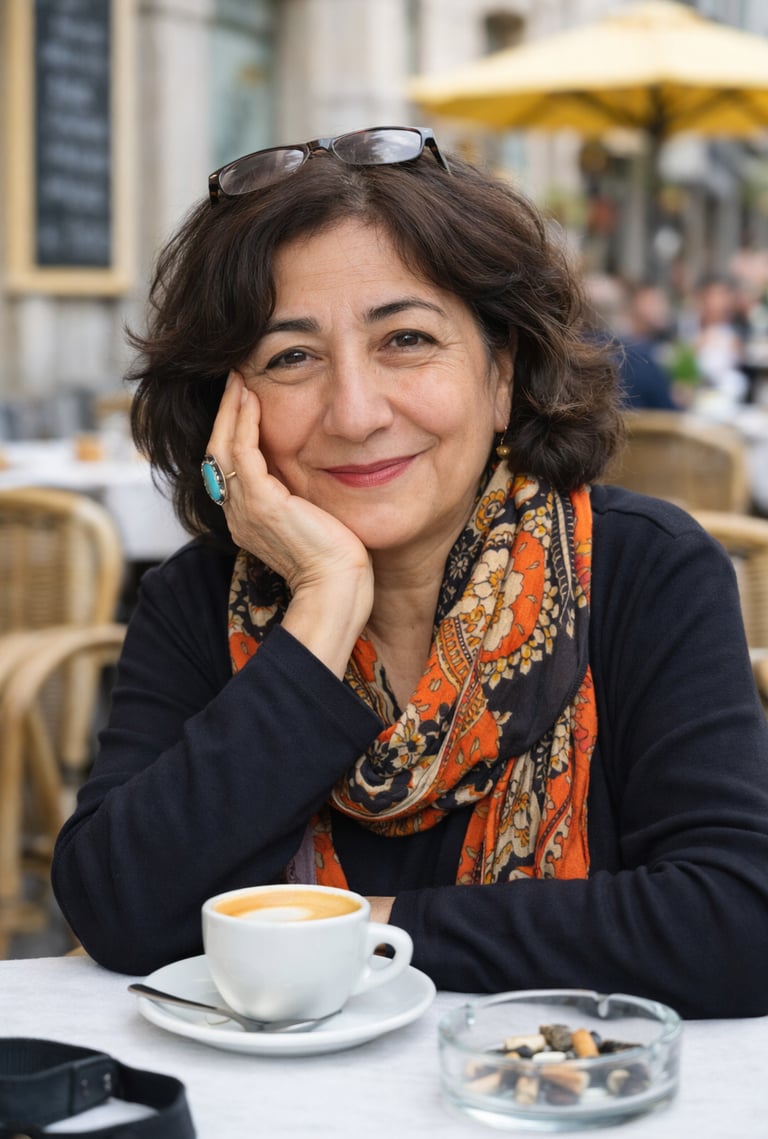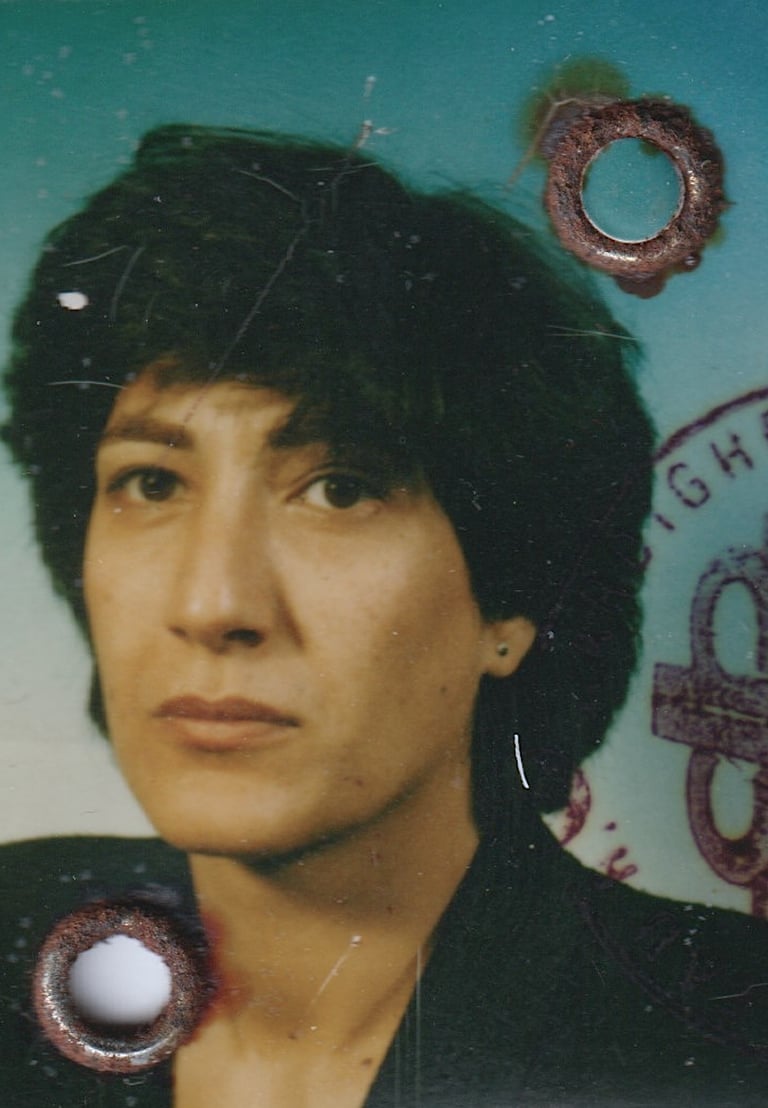
Elli Safari is an Iranian documentary filmmaker based in the Netherlands, whose work deals with philosophical, social and cultural questions, with a particular focus on societal injustice, religious reform and feminism.
Active in cinema over five decades, her practice spans directing, screenwriting, editing, costume design and photography. She began her artistic career at a young age as a writer for a prominent Iranian literary magazine 'Ferdosi', where she developed an early sensitivity to language, image, and critical thought.
Safari worked in Iranian cinema From the 1970s through 1990, both before and after the Iranian Revolution. She began as a costume designer and assistant director, collaborating with leading filmmakers such as Naser Taghvaei. As assistant-director and costume designer, she also participated in the iconic 17-part television drama Dear Uncle Napoleon, a landmark in Iranian popular culture.
From the 1970s onward, she developed her own documentary practice and become the first female filmmaker associated within the Free Cinema movement in Iran. Her socially engaged and critical films faced censorship and bans, both before and after the Iranian Revolution, reflecting the uncompromising nature of her perspective.
After relocating to the Netherlands in 1990, she studied philosophy as well as film and television sciences at the universities of Amsterdam and Utrecht. This academic background continues to inform the reflective and philosophical dimensions of her work.
Alongside her filmmaking, Safari played a significant role in film education in Iran. In the 1980s, together with her first husband, the award-winning director and actor Shahryar Parsipur, director Nassi Sheybani, and her later husband, editor and filmmaker Khosro Razi, she co-founded the private film institute Markaz-e Motaleat-e Sinamayi (Center of Cinematic Studies) in Tehran.
The institute provided an important space for learning, exchange, and the development of new voices in Iranian cinema. It also maintained a unique private video archive on film history known as 'Kino Video', frequently used by film academies and cultural institutions, including state television. Many key figures of Iranian arthouse cinema were connected to the center, including future internationally renowned filmmaker such as Mohsen Makhmalbaf.
After the Revolution, the Islamic authorities closed the Film Museum in Tehran. Following the success of the Center of Cinematic Studies, they asked Safari to become the new director, but she refused because she did not want to work under religious control. Despite increasing pressure from the authorities and repeated attempts to shut it down, Safari continued her work at the institute until it was ultimately forced to close. Following multiple arrests, imprisonment, and court cases, and in the face of a direct death threat, she left Iran with her two children in 1990 and settled in the Netherlands.
In exile, she continued making films. Her documentaries have been broadcast by Dutch Public Broadcasting and the BBC, and screened at international festivals in London, Berlin, and Rome. Her work is also used in universities curricula in the United States.
Her documentary Medium of Love received a Special distinction at the Asiatica Film Mediale Festival in Rome. In recognition of her work, the city of Rome named her an Honorary Citizen.
Safari's films are marked by a humanistic perspective and a sustained attention to the unseen dimensions of everyday life, inviting deeper reflection on social and philosophical themes.
As an Iranian female documentary filmmaker, she is only preceded by the pioneering poet Forough Farrokhzad, who directed a single documentary in the 1960s before her untimely death.
In addition to filmmaking, Safari continues to write and work in photography. She has lectured on Iranian cinema in the Netherlands and is regularly invited as a panellist on Iranian cinema and culture.